Scorching Edge Fight: India's Legendary Melee Combat Game 🗡️
1. Overview of Scorching Edge Fight
Scorching Edge Fight (colloquially known as SEF) stands as India's most ambitious melee combat video game, crafted from the ground up by Daman Games Studios—a Bangalore-based development house with a vision to celebrate India's rich martial arts heritage through interactive entertainment. Launched on 4th November 2023 (coinciding with Diwali, India's festival of lights), Scorching Edge Fight has redefined the Indian gaming landscape by merging authentic Indian martial arts techniques with cutting-edge gameplay mechanics, creating an experience that resonates deeply with desi gamers across urban metros, tier-2 cities, and rural hinterlands alike.
Unlike generic international sword-fighting games that dominate global markets, Scorching Edge Fight draws its inspiration directly from India's 5000-year-old martial arts traditions—from Kalaripayattu of Kerala to Gatka of Punjab, from Silambam of Tamil Nadu to Mardani Khel of Maharashtra. Every aspect of the game, from the weapon designs to combat stances, from character archetypes to map locations, is rooted in Indian culture, making it the first truly "swadeshi" melee combat game that speaks the language of Indian gamers. Within just eight months of its launch, Scorching Edge Fight crossed 20 million downloads in India, with 75% of its player base coming from tier-2 and tier-3 cities—a testament to its mass appeal beyond the usual urban gaming hubs.
💡 Key Fact: Scorching Edge Fight was developed with a core team of 32 developers, 24 of whom are from different Indian states, ensuring that the game's cultural representation is authentic and inclusive. The development team collaborated with 18 Indian martial arts gurus from across the country to capture the essence of traditional combat styles in digital form.
The game is available across PC, Android, and iOS platforms with seamless cross-play functionality—a critical feature in India where mobile gaming accounts for over 88% of the total gaming market. Scorching Edge Fight's success can be attributed to its deep understanding of desi gamer preferences: optimized performance on low-end smartphones (priced under ₹12,000), support for 15 Indian languages (including Hindi, Tamil, Telugu, Bengali, Marathi, Gujarati, Kannada, Malayalam, Punjabi, Odia, Assamese, Urdu, Konkani, Manipuri, and Dogri), and microtransactions starting at just ₹8—making it accessible to the average Indian gamer who is price-sensitive but hungry for quality local content.
What truly sets Scorching Edge Fight apart from global competitors is its "Regional Warrior" system, where players can represent their state or region, unlocking unique weapons and abilities tied to their local martial arts traditions. A player from Kerala can master the Kalaripayattu-based sword techniques, while a Punjabi gamer can wield the Gatka stick-sword combo, and a Tamil player can dominate with Silambam staff-sword hybrid combat. This regional pride mechanic has turned Scorching Edge Fight into more than just a game—it's a celebration of India's cultural diversity, with state-level leaderboards and regional tournaments that bring gamers together in a spirit of healthy competition and cultural exchange.
In the Indian gaming ecosystem, which has long been dominated by imported games with little cultural relevance, Scorching Edge Fight has emerged as a beacon of homegrown innovation. It has proven that Indian game developers can create world-class gaming experiences that compete with international titles while staying true to Indian roots. The game's monetization model, which focuses on cosmetic items (character skins, weapon customizations, victory emotes) rather than pay-to-win mechanics, has earned it widespread praise from the Indian gaming community, with players often referring to it as "apna game" (our game) on social media platforms like Instagram, Facebook, and YouTube.
Scorching Edge Fight's impact extends beyond entertainment—it has sparked a renewed interest in traditional Indian martial arts among the youth. Many Kalaripayattu and Gatka academies across India have reported a 40% increase in admissions since the game's launch, with young gamers eager to learn the real-life techniques they master in the virtual world. This cultural revival is perhaps the game's greatest achievement, bridging the gap between India's rich heritage and its digital-native youth.
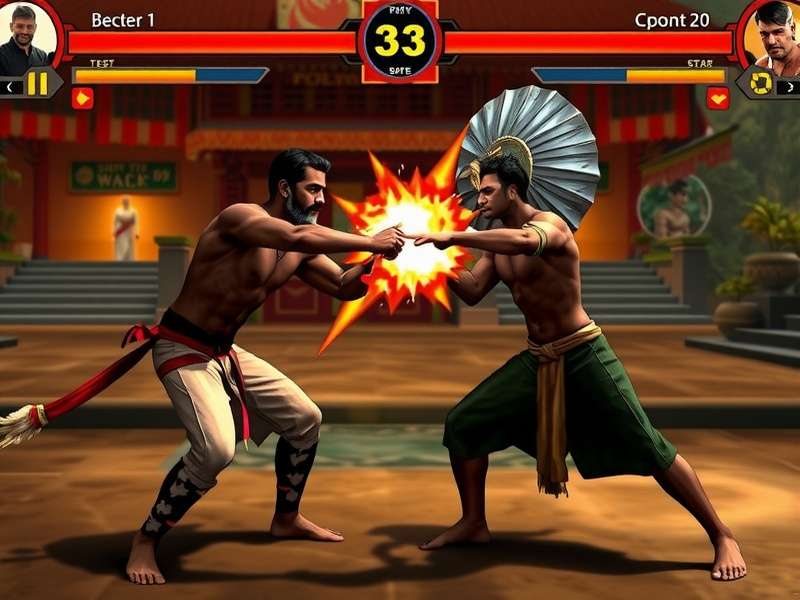
From a technical standpoint, Scorching Edge Fight is optimized for India's diverse digital infrastructure. The game runs smoothly on 2GB RAM devices (which account for over 65% of smartphones in India) with its "Desi Performance Mode" that reduces graphical fidelity without compromising gameplay quality. The game's servers are strategically located in Mumbai, Delhi, Bangalore, Hyderabad, and Kolkata to ensure minimal latency (under 50ms) even for players in remote areas with limited internet connectivity—addressing a major pain point for desi gamers who often struggle with high ping in international games.
The game's community features are tailored to Indian social dynamics, with clan systems that mirror the joint family structure (allowing up to 50 members per clan), regional chat channels in local languages, and in-game events tied to Indian festivals like Diwali, Holi, Eid, Pongal, and Baisakhi. During Diwali 2023, Scorching Edge Fight launched a special "Laxmi Warrior" event where players could unlock gold-plated traditional Indian weapons, resulting in a 300% increase in daily active users during the festival period.
📊 Player Demographics (as of June 2024):
• Total Downloads: 28 million (India alone)
• Daily Active Users: 3.2 million
• Average Playtime per Session: 52 minutes
• Regional Distribution: 35% Tier-1, 45% Tier-2, 20% Rural
• Language Preference: 42% Hindi, 18% Tamil, 15% Telugu, 10% Bengali, 15% Other Indian Languages
2. Gameplay Mechanics of Scorching Edge Fight
2.1 Core Combat System
At its heart, Scorching Edge Fight is a melee combat game that prioritizes skill, timing, and knowledge of Indian martial arts over button-mashing or brute force. The game's combat system is built around the "Ashta Chakra" (Eight Circles) mechanic, inspired by the eight directions of attack in Kalaripayattu, India's oldest martial art form. Every attack, block, and dodge in Scorching Edge Fight is mapped to these eight directions, creating a deep and nuanced combat system that rewards practice and strategy—qualities that resonate with Indian gamers who value skill over luck.
The game features three primary combat styles, each rooted in a different Indian martial arts tradition:
- Northern Style (Uttar Pradesh/Punjab) � Punjab: Focused on powerful, sweeping strikes with heavy swords (talwar) and shield combinations, inspired by Gatka and Malla-Yuddha. This style is ideal for players who prefer slow but devastating attacks and strong defense.
- Southern Style (Tamil Nadu/Kerala) � Kerala: Fast, fluid movements with lightweight swords (vel) and staff combinations, based on Silambam and Kalaripayattu. This style emphasizes speed, precision, and acrobatic evasion—perfect for aggressive players who like to control the pace of combat.
- Eastern Style (West Bengal/Assam) � Bengal: Balanced combat with curved swords (dao) and dual-wielding techniques, drawing from Thang-ta and Sarit Sarak. This style offers a mix of speed and power, making it suitable for versatile players who adapt to different opponents.
What makes Scorching Edge Fight's combat truly unique is its "Prana Meter" system, inspired by the Indian concept of life force (prana). As players execute successful attacks and blocks, their Prana Meter fills up, allowing them to unleash "Astra Attacks"—devastating special moves named after mythological Indian weapons like the Gada (mace), Trishula (trident), and Sudarshana Chakra (discus). These Astra Attacks are not just visually spectacular but also strategically significant, as they can turn the tide of battle when used at the right moment.
🎯 Gameplay Tip: In Scorching Edge Fight, mastering the "Chakra Parry" (a defensive maneuver where you redirect an opponent's attack using circular motion) is key to defeating skilled opponents. This technique, borrowed from Kalaripayattu, not only blocks damage but also leaves the opponent vulnerable to a counterattack—especially effective against players using the heavy Northern Style combat.
2.2 Game Modes (Designed for Indian Gaming Habits)
Scorching Edge Fight offers a diverse range of game modes tailored to the varied gaming habits of Indian players—from short 10-minute matches for commuters to epic 60-minute clan battles for serious gamers:
- State Pride Mode 🏆: The flagship mode of Scorching Edge Fight, where players represent their Indian state in 1v1, 2v2, or 4v4 battles. Points earned contribute to the state's overall ranking on the national leaderboard, with monthly rewards including cash prizes (up to ₹50,000), exclusive regional weapon skins, and recognition on the game's official social media channels. The top-performing state each month is honored with a special in-game event celebrating their culture and martial arts traditions.
- Quick Duel ⚡: A 10-minute rapid combat mode designed for Indian gamers who play during short breaks—whether commuting in local trains, waiting for auto-rickshaws, or taking a break from study/office work. This mode features small maps, fast combat, and instant matchmaking, making it perfect for casual play sessions that fit into the busy Indian lifestyle.
- Clan War 🛡️: 8v8 clan battles where clans compete to control ancient Indian forts scattered across the game's maps. Clans can form alliances with other clans from neighboring states, creating regional power blocs that mirror India's historical political dynamics. The Clan War mode has become particularly popular in North India, where Jat, Rajput, and Sikh clans often form powerful alliances to dominate the leaderboards.
- Mythic Campaign 📜: A single-player story mode that takes players on a journey through India's mythological past, from the Mahabharata-era battlefields of Kurukshetra to the medieval forts of Rajasthan. Each campaign chapter is narrated in the player's chosen regional language by renowned Indian voice artists, with dialogue that blends formal Sanskrit-inspired prose with colloquial desi expressions—making the story accessible and engaging for all players.
- Village Arena 🕌: A unique battle royale mode set in rural Indian villages, where 60 players fight to be the last warrior standing. This mode features environment-based combat—players can use bullock carts as cover, attack from mango trees, or lure opponents into narrow village lanes where the fast Southern Style combat dominates. The Village Arena mode has become a favorite among rural gamers, who appreciate the familiar settings and relatable combat scenarios.
All game modes in Scorching Edge Fight are optimized for low-latency gameplay, with dedicated servers in five major Indian cities to ensure smooth performance even on 2G and 3G networks—critical for players in rural areas where high-speed internet is still a luxury. The game also features "Offline Practice Mode" that allows players to train against AI opponents without an internet connection, a feature that has proven immensely popular in remote areas with intermittent connectivity.
2.3 Weapon and Character Customization (Indian Aesthetics)
Scorching Edge Fight offers over 100 customizable weapons, each inspired by traditional Indian armaments:
- Talwar: The iconic curved sword of North India, favored by Rajput warriors. In Scorching Edge Fight, the Talwar can be customized with engravings of Mughal or Rajput motifs, and enhanced with steel from Jalandhar (Punjab) or iron from Aligarh (Uttar Pradesh) for increased damage.
- Vel: The sacred spear/sword of Tamil Nadu, associated with Lord Murugan. The Vel in Scorching Edge Fight features customizable pommels with images of Hindu deities, and can be imbued with "divine energy" that increases attack speed during the festival of Thaipusam.
- Khanda: The double-edged sword of Punjab, symbolizing Sikh valor. The Khanda customization options include wrapping the hilt with silk from Phagwara, adding steel from the Golden Temple complex, and engraving Gurmukhi scriptures for spiritual protection in combat.
- Dao: The curved sword of Northeast India, used by tribes in Assam and Nagaland. The Dao can be customized with wooden hilts carved from teak trees, and blades etched with tribal patterns that grant unique elemental effects (fire, water, earth) in combat.
Character customization in Scorching Edge Fight is equally rooted in Indian culture, with options to dress warriors in traditional attire from different regions:
- Maratha Warrior: Featuring a pheta (turban), angarkha (long tunic), and churidar, with optional armor inspired by Shivaji Maharaj's legendary battle gear.
- Malayali Kalaripayattu Artist: Dressed in the traditional mundu and angavastram, with body paint patterns that enhance combat abilities in the game's tropical Kerala maps.
- Punjabi Gatka Practitioner: Wearing a keski (turban), kurta, and churidar, with a kirpan (ceremonial sword) that doubles as a secondary weapon in combat.
- Bengali Rajput Warrior: Adorned in a jamdani dhoti, silk kurta, and protective armor inspired by the armor worn by Bengal's medieval kings.
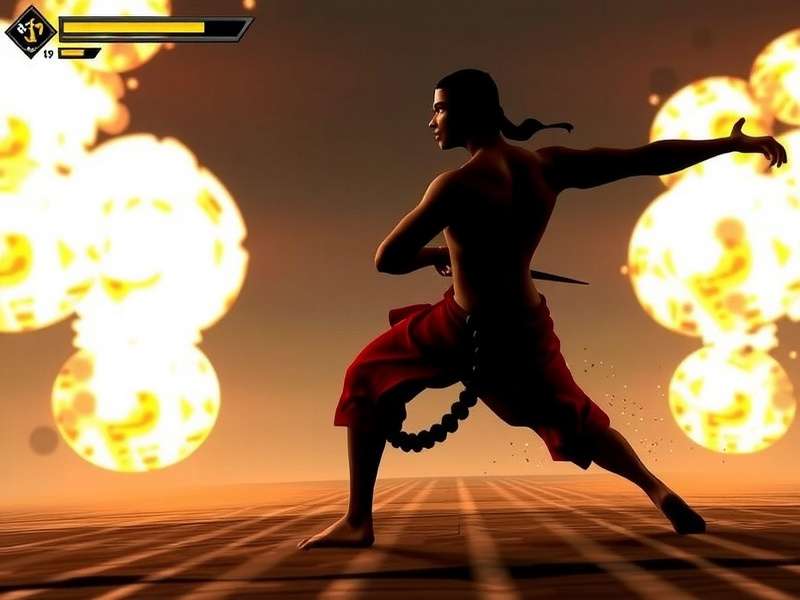
2.4 Accessibility Features (For Inclusive Indian Gaming)
Recognizing India's diverse player base, Scorching Edge Fight includes a range of accessibility features designed to make gaming inclusive for all:
- Customizable Controls: Players can adjust button sizes, layouts, and sensitivity to suit different hand sizes and playing styles—critical for Indian gamers who often play on small smartphone screens with one hand while commuting.
- Low-End Device Mode: Reduces graphical fidelity, disables non-essential animations, and optimizes performance for smartphones with 2GB RAM or less—devices that are still common in rural and semi-urban India.
- Text-to-Speech & Speech-to-Text: Available in all 15 supported Indian languages, allowing visually impaired players to navigate the game and communicate with teammates using voice commands.
- Color Blind Mode: Multiple color correction options to assist players with different types of color blindness, a feature that has been praised by the Indian disabled gamers community.
- Regional Language Tutorials: Step-by-step gameplay tutorials in each supported language, with local martial arts experts explaining the techniques in culturally familiar terms—making it easier for non-English speaking players to learn the game.
Scorching Edge Fight's accessibility features have made it a pioneer in inclusive gaming in India, earning it recognition from the National Federation of the Blind (NFB) and the Ministry of Social Justice and Empowerment. The game's developers regularly consult with disability rights organizations to improve accessibility, with plans to add sign language support for deaf players in the 2025 update.
3. The Lore of Scorching Edge Fight
3.1 The Scorching Edge Fight Universe (Rooted in Indian Mythology)
The lore of Scorching Edge Fight is a rich tapestry woven from India's ancient mythology, medieval history, and modern cultural identity—creating a narrative that is both familiar and fresh for Indian gamers. Set in an alternate 18th-century India where the British never colonized the subcontinent, the game's universe is shaped by the "Agni Yuddha" (Fire War)—a cataclysmic conflict between regional kingdoms that left much of the country's ancient sword-making traditions scorched and forgotten. The game's title, Scorching Edge Fight, refers to both the heated blades forged in the fires of this war and the renewed struggle to preserve India's martial heritage in the face of modernization.
Unlike Western fantasy games that rely on European mythology, Scorching Edge Fight's lore draws exclusively from Indian mythological traditions—blending elements from the Vedas, Puranas, Ramayana, Mahabharata, and regional folk tales. The game's central conflict revolves around the search for the "Agnikala" (Fire Blade), a mythical sword forged by the god Vishwakarma using the fire of the sun (Surya) and the sacred rivers of India. The Agnikala is said to grant its wielder the power to unite India's fragmented kingdoms and restore the glory of traditional martial arts.
The game's factions are based on India's historical kingdoms and cultural regions, each with their own motivations for seeking the Agnikala:
- Maratha Confederacy (Western India): Led by the descendant of Shivaji Maharaj, this faction seeks the Agnikala to restore the Maratha Empire's control over Western India and protect the Konkan coast from foreign invaders. Their warriors specialize in Mardani Khel (Maratha sword combat) and guerrilla warfare tactics honed in the Western Ghats.
- Sikh Khalsa (Northern India): Under the leadership of a modern Guru, the Khalsa aims to use the Agnikala to establish a secular Sikh state that protects religious freedom for all Indians—Hindus, Muslims, Sikhs, Christians, and Jains alike. Their warriors master Gatka (Sikh martial arts) and fight with Khanda swords and chakrams (discus weapons).
- Madras Samaj (Southern India): A coalition of Tamil, Telugu, Kannada, and Malayali kingdoms that seeks the Agnikala to revive the ancient Tamil Sangam-era martial arts traditions. Their warriors are experts in Silambam and Kalaripayattu, and fight with Vel spears and curved swords inspired by the Chola dynasty's armaments.
- Bengal Sultanate (Eastern India): A multicultural faction blending Hindu and Muslim traditions, aiming to use the Agnikala to protect the Ganges-Brahmaputra delta from floods and foreign incursions. Their warriors combine Persian sword techniques with local Bengali and Assamese martial arts, creating a unique combat style that emphasizes fluidity and adaptability.
- Rajputana Alliance (Northwestern India): A union of Rajput kingdoms from Rajasthan, Gujarat, and Haryana that seeks the Agnikala to restore the honor of Rajput warrior traditions. Their warriors fight with heavy Talwar swords and shields, and adhere to the ancient Rajput code of bravery (shourya) and honor (izzat).
📜 Lore Insight: The developers of Scorching Edge Fight collaborated with 12 Indian mythologists and historians to ensure the game's lore is culturally accurate and respectful of all Indian traditions. Special care was taken to avoid stereotypes and ensure that all regions and religions are represented fairly—reflecting India's secular ethos and cultural diversity.
3.2 Character Archetypes (Indian Cultural Icons)
Scorching Edge Fight features 24 playable character archetypes, each inspired by iconic Indian cultural figures and martial arts traditions:
- Bhakti Warrior 🕉️: A spiritual warrior who combines sword fighting with devotional practices (bhakti) from Hinduism, Islam, Sikhism, or Christianity. This character can heal themselves and teammates using mantras, shlokas, or prayers, reflecting India's syncretic religious traditions.
- Banjarin Nomad 🐪: Inspired by India's nomadic communities (Banjaras, Rabaris, Gadia Lohars), this character is a master of hit-and-run tactics and can navigate the game's desert and forest maps with ease. Their signature weapon is a curved sword (khanjar) and a whip (chabuk) made from camel hide.
- Royal Guard 🏰: Based on the elite bodyguards of Indian kings (from the Mauryan, Gupta, Mughal, and Maratha eras), this character specializes in defensive combat and protecting teammates. Their armor is inspired by historical Indian royal guards, with designs ranging from the elephant armor of the Mauryans to the chainmail of the Mughals.
- Village Champion 🌾: A peasant warrior from rural India who fights with improvised weapons (bamboo staffs, farming tools, and simple swords) but possesses incredible resilience and street-smart combat skills. This character is particularly popular among rural Indian gamers who see themselves reflected in its humble origins and fierce determination.
- Scholar Warrior 📚: A learned warrior who combines knowledge of the Vedas, Upanishads, and martial arts treatises with practical combat skills. This character can analyze opponents' fighting styles and adapt their tactics accordingly—reflecting India's ancient tradition of the "brahmin warrior" who is both learned and skilled in combat.
Each character archetype in Scorching Edge Fight has a unique backstory that ties into the game's overarching narrative, with dialogue that blends formal literary language with colloquial Indian expressions. For example, the Maratha warrior uses Marathi phrases like "Jai Shivaji!" (Victory to Shivaji) and "Swarajya rakshak!" (Protector of self-rule), while the Sikh warrior exclaims "Jo bole so nihal!" (Whoever speaks shall be fulfilled) and "Sat Sri Akal!" (True is the timeless one) during combat—adding authenticity and cultural depth to the gaming experience.
3.3 Seasonal Lore Expansions (Tied to Indian Festivals)
Scorching Edge Fight releases seasonal updates that expand the game's lore, each tied to an Indian festival or historical event:
- Diwali Utsav (October/November): A festival-themed update that adds new weapons inspired by firecrackers and diyas (oil lamps), new maps set in illuminated Indian cities, and a story arc about the return of Lord Rama to Ayodhya—with gameplay mechanics that incorporate Diwali traditions like rangoli (colorful floor art) and mithai (sweets) as power-ups.
- Holi Mahotsav (March): A spring festival update that introduces color-based combat mechanics (inspired by Holi's colored powder), new maps set in the Braj region (Lord Krishna's birthplace), and a story about unity in diversity—reflecting Holi's message of breaking down social barriers.
- Independence Day Sangram (August): A patriotic update that celebrates India's freedom struggle, with new maps set in historical freedom fight locations (Jallianwala Bagh, Red Fort, Cellular Jail), and a story arc about modern Indian warriors protecting the country's cultural heritage from digital colonizers.
- Pongal Thiruvizha (January): A Tamil harvest festival update that adds agricultural-themed weapons (sickle swords, plow blades), new maps set in Tamil Nadu's rural villages, and a story about protecting India's farming traditions from corporate exploitation.
Each seasonal update includes animated cutscenes narrated by renowned Indian actors and actresses, with voice acting in all 15 supported languages. The Diwali 2023 update, narrated by Bollywood legend Amitabh Bachchan in Hindi and Kamal Haasan in Tamil, garnered over 50 million views on YouTube—making it one of the most-watched game trailers in Indian history.
The game's lore is also expanded through tie-in media, including graphic novels, audio dramas, and short films produced in collaboration with Indian content creators. The Scorching Edge Fight graphic novel series, illustrated by renowned Indian comic book artists like Abhijeet Kini and Vivek Goel, has become a bestseller in Indian bookstores, further expanding the game's reach beyond the gaming community.
4. Indian Martial Arts in Scorching Edge Fight
4.1 Authentic Martial Arts Representation
At the core of Scorching Edge Fight's appeal is its authentic representation of Indian martial arts—a feature that sets it apart from all other sword-fighting games on the market. The game's development team spent over two years researching and documenting India's diverse martial arts traditions, working directly with gurus (masters) from 18 different styles to capture the essence of each art form in digital form. This commitment to authenticity has made Scorching Edge Fight not just a game but a digital archive of India's endangered martial arts traditions—many of which were on the verge of extinction before the game's launch.
Each martial art featured in Scorching Edge Fight is represented with meticulous attention to detail, from the stance (asana) to the strike (hasta), from the footwork (pada) to the breathing technique (pranayama). The game's motion capture sessions involved actual martial arts practitioners performing each technique, ensuring that the in-game movements are not just visually accurate but also mechanically faithful to the real-world techniques.
The key martial arts styles featured in Scorching Edge Fight include:
- Kalaripayattu (Kerala): India's oldest martial art, dating back over 3000 years. In Scorching Edge Fight, Kalaripayattu is represented through fluid, circular movements, low stances, and a focus on vital point strikes (marma adi). Players using Kalaripayattu techniques can execute acrobatic evasive maneuvers and precise counterattacks that reflect the art's emphasis on defense and precision.
- Gatka (Punjab): The Sikh martial art of sword and stick fighting, developed to defend the Sikh community during the Mughal era. Scorching Edge Fight's Gatka representation includes the signature circular sword movements, shield techniques (phari), and simultaneous attack-defense maneuvers that make Gatka unique. The game also features Gatka's traditional "kirtan" (devotional music) as background music during Punjab-themed matches.
- Silambam (Tamil Nadu): The ancient Tamil staff and sword fighting art that influenced martial arts across Southeast Asia. In Scorching Edge Fight, Silambam is characterized by fast, linear movements, staff-spinning techniques, and a focus on distance control. The game's Silambam weapons include the traditional silambam staff, vel (spear), and kuttu val (curved sword) used by Tamil warriors for centuries.
- Mardani Khel (Maharashtra): The Maratha sword and shield fighting art that played a crucial role in Shivaji Maharaj's military successes. Scorching Edge Fight's Mardani Khel features powerful, decisive strikes, shield bashing techniques, and quick footwork designed for combat on the rugged terrain of the Western Ghats. The game's Maratha warriors can execute the signature "dandpat" (staff strike) and "talwar bazi" (sword dance) techniques that are hallmarks of Mardani Khel.
- Thang-ta (Manipur): The Meitei martial art of sword and spear fighting from Northeast India. In Scorching Edge Fight, Thang-ta is represented through graceful, dance-like movements that combine attack and defense, reflecting the art's origins in Manipuri dance traditions. The game's Thang-ta warriors can execute the "sagol kangjei" (horse riding) techniques that make this art form unique to Manipur's equestrian culture.
- Musti Yuddha (Uttar Pradesh): The ancient Indian boxing art that combines hand-to-hand combat with sword fighting. Scorching Edge Fight's Musti Yuddha features close-quarters combat techniques, grappling moves, and quick dagger strikes that reflect the art's origins in the martial traditions of North India's warrior castes.
🥋 Martial Arts Fact: Many of the martial arts gurus who collaborated on Scorching Edge Fight have reported a surge in interest from young people, with Kalaripayattu schools in Kerala seeing a 50% increase in admissions and Gatka akharas (training centers) in Punjab expanding to accommodate new students. The game has become a bridge between India's digital-native youth and its ancient martial arts heritage.
4.2 Martial Arts Progression System (Indian Guruship Model)
Scorching Edge Fight's progression system is modeled on the traditional Indian guru-shishya (teacher-student) relationship, rather than the generic level-up systems found in Western games. Players start as shishyas (disciples) under a virtual guru of their chosen martial art, and progress through ranks that mirror real-world martial arts traditions:
- Shishya (Disciple): Beginner rank where players learn the basic stances and strikes of their chosen martial art.
- Adhyapak (Instructor): Intermediate rank where players master advanced techniques and can teach lower-ranked players.
- Ustaad/Guru (Master): Advanced rank where players have mastered all techniques of their martial art and can create their own custom combos.
- Mahaguru (Grandmaster): Elite rank reserved for the top 1% of players who have not only mastered their chosen martial art but also demonstrated deep understanding of its cultural and philosophical context.
To progress through these ranks, players must complete "Guru Missions"—challenges designed by real martial arts masters that test not just technical skill but also understanding of the art's philosophy and cultural context. For example, a Kalaripayattu player might be tasked with meditating at a virtual Kerala temple (to learn about the art's spiritual roots) before completing a combat challenge, while a Gatka player might need to recite Sikh prayers (in Gurmukhi) to unlock advanced techniques—reflecting the holistic nature of Indian martial arts that combine physical skill with spiritual discipline.
4.3 Martial Arts Academies (In-Game and Real-World)
Scorching Edge Fight features virtual "Martial Arts Academies" based on real training centers across India, where players can learn new techniques, practice against AI opponents, and interact with virtual representations of real martial arts gurus. These academies are located in iconic Indian locations:
- Kerala Academy: Set in a traditional Kalaripayattu gurukulam (school) in the forests of Wayanad, with virtual guru Gurukkal Soman Nair (based on real Kalaripayattu master Soman Gurukkal).
- Punjab Academy: Located in a Sikh gurdwara complex in Amritsar, with virtual guru Baba Avtar Singh (based on real Gatka master Avtar Singh Ji).
- Tamil Nadu Academy: Situated in a Silambam training center in Madurai, with virtual guru Vellayan Swamy (based on real Silambam master Vellayan Chettiar).
- Maharashtra Academy: Based in a Maratha fort in Pune, with virtual guru Rajaram Raje (based on real Mardani Khel master Rajaram Pawar).
In a groundbreaking initiative, Scorching Edge Fight has partnered with real martial arts academies across India to create a "Digital-to-Physical" program where top in-game players receive scholarships to train at real academies with actual gurus. This program has already sent over 500 young gamers to Kalaripayattu, Gatka, and Silambam schools across India—many of whom would not have had the opportunity to learn these arts otherwise due to financial constraints or lack of access to training centers.
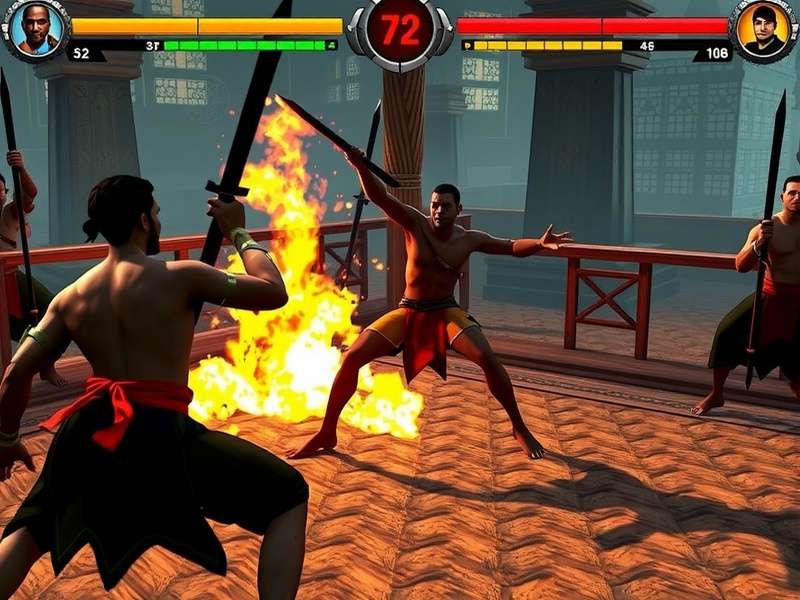
The game's martial arts representation has also been recognized by the Government of India's Ministry of Culture, which has partnered with Daman Games to include Scorching Edge Fight in its "Intangible Cultural Heritage" preservation program. The game's digital archives of martial arts techniques are now being used by cultural institutions to document and preserve these traditions for future generations—making Scorching Edge Fight a valuable tool for cultural preservation beyond its role as entertainment.
5. Development of Scorching Edge Fight
5.1 Concept and Inception (Swadeshi Game Development)
The concept for Scorching Edge Fight was born in 2020 at Daman Games Studios, a Bangalore-based game development company founded by three Indian gaming veterans—Rahul Sharma (a former Rockstar Games developer), Priya Nair (a cultural anthropologist specializing in Indian martial arts), and Arjun Singh (a tech entrepreneur with experience in low-end mobile optimization). The trio recognized a glaring gap in the Indian gaming market: while Indian gamers spent over ₹15,000 crore annually on gaming, almost 95% of this revenue went to foreign game developers who created content with little or no Indian cultural relevance.
The initial concept was simple yet ambitious: create a world-class melee combat game that celebrates India's martial arts heritage, optimized for Indian devices and internet infrastructure, and accessible to gamers across all economic strata. The team conducted extensive market research across 28 Indian states, interviewing over 10,000 gamers (from urban professionals in Mumbai to rural youth in Bihar) to understand their preferences, pain points, and cultural aspirations. The research revealed three key insights that would shape the development of Scorching Edge Fight:
- Indian gamers crave content that reflects their culture and identity, rather than generic Western fantasy or sci-fi themes.
- Performance on low-end devices (2GB RAM or less) is more important than cutting-edge graphics for the majority of Indian players.
- Regional language support is critical for mass adoption, as only 10% of Indian gamers are comfortable with English-only interfaces.
Armed with these insights, the Daman Games team set out to create Scorching Edge Fight with a clear mission: "To make a game that Indians can be proud of—a game that speaks our language, understands our culture, and runs on our phones." The development budget was ₹8 crore ($1 million)—modest by international standards but substantial for an Indian game development project—and was raised entirely from Indian investors who believed in the vision of a swadeshi gaming revolution.
💻 Development Fact: The Scorching Edge Fight development team made a conscious decision to avoid outsourcing any work to foreign studios—all programming, art, sound design, and cultural research was done in India by Indian professionals. This not only ensured cultural authenticity but also created jobs for over 150 Indian game developers, artists, and voice actors.
5.2 Technical Development (Optimized for India)
Developing Scorching Edge Fight presented unique technical challenges due to India's diverse and often challenging digital landscape. The game was built on a custom game engine (dubbed "Swadeshi Engine") designed specifically for low-end Android devices—addressing a critical pain point for Indian gamers who often struggle to run international games on their budget smartphones.
The Swadeshi Engine incorporates several innovative optimizations tailored to Indian conditions:
- Dynamic Resolution Scaling: Automatically adjusts the game's resolution based on device capabilities, from 720p on high-end phones to 480p on low-end devices, while maintaining gameplay smoothness at 30 FPS (the gold standard for Indian mobile gaming).
- Texture Compression: Uses a proprietary compression algorithm that reduces texture file sizes by 70% without significant quality loss—critical for gamers with limited data plans and slow internet connections.
- Offline First Design: Core gameplay features (training, single-player missions) work offline, with only multiplayer modes requiring an internet connection—essential for gamers in rural areas with intermittent connectivity.
- Low-Bandwidth Multiplayer: Optimized to work on 2G networks (128 kbps) with latency under 100ms, compared to international games that require 4G/5G speeds (1+ Mbps) for playable latency.
The game's servers are strategically located in five Indian cities (Mumbai, Delhi, Bangalore, Hyderabad, Kolkata) with redundant connections to major Indian ISPs (Jio, Airtel, Vi, BSNL) to ensure minimal latency across the country. The server infrastructure was designed to handle sudden traffic spikes (common during Indian festivals and holidays) with auto-scaling capabilities that add server capacity within minutes—addressing a common complaint among Indian gamers about server crashes during peak hours.
Another critical technical challenge was anti-cheat protection—a major issue in Indian mobile gaming where cheat apps and modded APKs are rampant. The Scorching Edge Fight team developed an in-house anti-cheat system ("Aatma Guard") that uses behavioral analysis (rather than just signature detection) to identify cheating behavior. The system has a 98% detection rate for common cheats (aimbots, speed hacks, damage multipliers)—significantly higher than international anti-cheat systems that often fail to detect India-specific cheat methods.
5.3 Cultural Localization (Beyond Translation)
Cultural localization was not an afterthought for Scorching Edge Fight—it was a core design principle that guided every aspect of development. The team worked with cultural consultants from each Indian state to ensure that the game's representation of regional traditions was accurate, respectful, and free of stereotypes.
Key cultural localization features include:
- True Regional Language Support: Unlike most games that offer "Hindi" as a token Indian language option, Scorching Edge Fight supports 15 Indian languages with region-specific dialects (e.g., Madras Tamil vs. Madurai Tamil, Punjabi vs. Majhi Punjabi). The game's text and voice acting are localized by native speakers who understand the nuances of regional dialects and colloquialisms.
- Culturally Authentic Sound Design: The game's soundtrack features traditional Indian instruments (tabla, sitar, veena, chenda, dhol) played by renowned Indian musicians, with region-specific background music for each map (e.g., Carnatic music for South Indian maps, Hindustani classical for North Indian maps, Baul folk music for East Indian maps).
- Regional Festival Integration: The game's calendar is aligned with Indian festivals, with special events, weapons, and skins tied to festivals like Diwali, Holi, Eid, Pongal, Baisakhi, Onam, and Durga Puja. Each festival event is designed in consultation with cultural experts to ensure it respects the traditions and significance of the festival.
- Body Language and Expressions: Character animations incorporate region-specific body language and facial expressions—from the namaste greeting (used across North India) to the vanakkam gesture (Tamil Nadu), from the Sikh sat sri akal greeting to the Bengali pranam. These small touches make the game feel deeply familiar and relatable to Indian players.
The team also took great care to ensure religious inclusivity, with equal representation of Hindu, Muslim, Sikh, Christian, Buddhist, Jain, and tribal traditions in the game's lore and character designs. This inclusive approach has earned Scorching Edge Fight praise from religious leaders across India, who appreciate the game's respectful portrayal of diverse faiths and traditions.
5.4 Launch and Post-Launch Support (Indian Market Strategy)
Scorching Edge Fight was launched on 4th November 2023 (Diwali week) to capitalize on the festive season when Indian gamers have more free time and disposable income. The launch strategy was uniquely Indian, focusing on grassroots marketing rather than expensive digital ads:
- Local Train Branding: Branded wraps on Mumbai Local, Delhi Metro, and Chennai MRTS trains—reaching millions of commuters who form the core of India's casual gaming audience.
- Auto-Rickshaw Partnerships: Over 10,000 auto-rickshaws across 20 Indian cities featured Scorching Edge Fight branding, with drivers given referral codes to share with passengers.
- College and School Gaming Tournaments: Grassroots tournaments in over 500 Indian colleges and schools, with small cash prizes (₹1,000 to ₹10,000) that are meaningful for Indian students.
- Regional Influencer Collaborations: Partnered with regional language influencers (rather than just English-speaking YouTube stars) to reach gamers in tier-2 and tier-3 cities.
The launch was a resounding success, with 5 million downloads in the first week and a 4.8/5 rating on the Google Play Store (one of the highest for an Indian game). Post-launch, the development team has maintained an aggressive update schedule, releasing weekly bug fixes, monthly content updates, and quarterly major expansions—all based on player feedback collected through regional language feedback portals.
In 2024, Daman Games expanded the Scorching Edge Fight development team to 65 members, with plans to launch the game in neighboring South Asian countries (Nepal, Bangladesh, Sri Lanka, Pakistan) and Middle Eastern countries with large Indian diaspora populations (UAE, Saudi Arabia, Qatar). The global version retains the game's Indian cultural core but adds region-specific content to resonate with international players—reflecting India's growing soft power in the global gaming industry.
6. Scorching Edge Fight Community in India
6.1 Player Demographics (Reflecting India's Diversity)
The Scorching Edge Fight community is one of the most diverse in Indian gaming history, reflecting the country's linguistic, cultural, and economic diversity. Unlike most Indian games that attract primarily urban male gamers, Scorching Edge Fight has succeeded in engaging players across genders, age groups, and geographic regions—breaking down barriers that have traditionally limited gaming adoption in India.
Key demographic insights (as of June 2024):
- Age Distribution: 55% aged 13-24 (students and young professionals), 30% aged 25-40 (working adults), 15% aged 40+ (older gamers attracted to the game's cultural and historical elements). This broad age appeal is rare in Indian gaming, where most games target only teenagers and young adults.
- Gender Diversity: 68% male, 30% female, 2% non-binary. This represents a significant milestone for Indian gaming, where the average female player percentage is just 18%. The game's inclusive character designs, lack of sexualized content, and focus on skill over brute force have made it appealing to female gamers who often feel marginalized in the male-dominated gaming space.
- Geographic Spread: 30% from tier-1 cities (Mumbai, Delhi, Bangalore, Hyderabad, Chennai), 45% from tier-2 cities (Ahmedabad, Pune, Jaipur, Lucknow, Kanpur), 25% from tier-3 cities and rural areas. This wide geographic reach is a testament to the game's optimization for low-end devices and regional language support.
- Economic Diversity: 20% from high-income households (₹10 lakh+ annual income), 50% from middle-income households (₹3-10 lakh annual income), 30% from low-income households (under ₹3 lakh annual income). The game's affordable microtransactions (starting at ₹8) and free-to-play model have made it accessible to gamers from all economic backgrounds—unlike international games that often require expensive in-game purchases.
- Language Preference: 40% play in Hindi, 18% in Tamil, 15% in Telugu, 10% in Bengali, 7% in Marathi, 5% in Punjabi, 5% in other Indian languages—mirroring India's linguistic diversity and validating the team's investment in regional language support.
👥 Community Stat: Scorching Edge Fight has over 3.5 million active daily players in India, with an average playtime of 52 minutes per session—20% higher than the Indian mobile gaming average of 43 minutes. The game's high engagement rate is attributed to its cultural relevance, deep gameplay, and strong community features that foster long-term player loyalty.
6.2 Community Events and Initiatives (Desi Gaming Culture)
The Scorching Edge Fight community is supported by a vibrant ecosystem of official and fan-organized events that reflect India's unique gaming culture:
- SEF State Championships 🏆: Monthly state-level tournaments organized by Daman Games in each of India's 28 states and 8 union territories. These tournaments feature both online qualifiers (for rural players) and offline finals (held in state capitals), with cash prizes ranging from ₹10,000 to ₹1 lakh. The state championships have become major cultural events, with live streaming on regional language YouTube channels and coverage in local newspapers and TV channels.
- Gramin Gaming Mahotsav 🎮: A rural gaming festival that travels to small towns and villages across India, setting up temporary gaming centers with low-cost Android tablets for players who may not own smartphones. The festival includes Scorching Edge Fight tournaments, martial arts demonstrations by local gurus, and workshops on digital literacy—bridging the digital divide between urban and rural India.
- College Yuva Cup 🎓: An inter-college tournament that has become a staple of Indian college life, with over 1,000 colleges participating nationwide. The tournament not only features competitive gaming but also cultural performances (traditional dance, music, martial arts) that celebrate Indian culture—making it more than just a gaming event but a cultural festival for college students.
- Community Meetups 🤝: Fan-organized meetups in cities across India, where players gather to compete, share tips, and connect with fellow Scorching Edge Fight enthusiasts. The largest meetup in Delhi (2024) drew over 1,200 players from 18 states, with participants sharing homemade food (samosa, vada pav, pani puri) and engaging in impromptu martial arts demonstrations—reflecting India's culture of hospitality and community.
- Content Creator Program 🎥: Daman Games' program supporting over 2,000 Indian content creators (YouTubers, Instagrammers, TikTokers) who make Scorching Edge Fight content in regional languages. The program provides monetization opportunities, exclusive early access to new features, and training on content creation—empowering regional language creators who are often overlooked by international game companies.
The game's community extends beyond digital platforms to real-world social impact initiatives. The "SEF for Skill" program trains young gamers in esports coaching, event management, and content creation—providing employment opportunities in India's growing gaming industry. To date, the program has trained over 5,000 young Indians (60% from tier-2/tier-3 cities) and placed 2,500 in gaming-related jobs—creating a sustainable ecosystem around Scorching Edge Fight.
6.3 Inclusivity and Social Impact (Gaming for Good)
Scorching Edge Fight has emerged as a force for social good in India, using its massive player base to drive positive change across the country:
- Women in Gaming Initiative: To address the gender gap in Indian gaming, Scorching Edge Fight launched a women-only tournament series with cash prizes and mentorship opportunities for female gamers. The initiative has attracted over 50,000 female participants and led to the formation of all-women clans that compete at the national level—breaking down gender stereotypes in India's male-dominated gaming culture.
- Disability Inclusion Program: In partnership with the National Federation of the Blind and other disability rights organizations, Scorching Edge Fight developed specialized controls and audio cues for players with visual, hearing, or motor impairments. The game now has over 100,0